
Is Your Land Really Ready for a Home? A Simple, Honest Checklist
January 26, 2026
Love Your Land: Why Building on Your Own Property Is the Smartest Long-Term Relationship
February 13, 2026
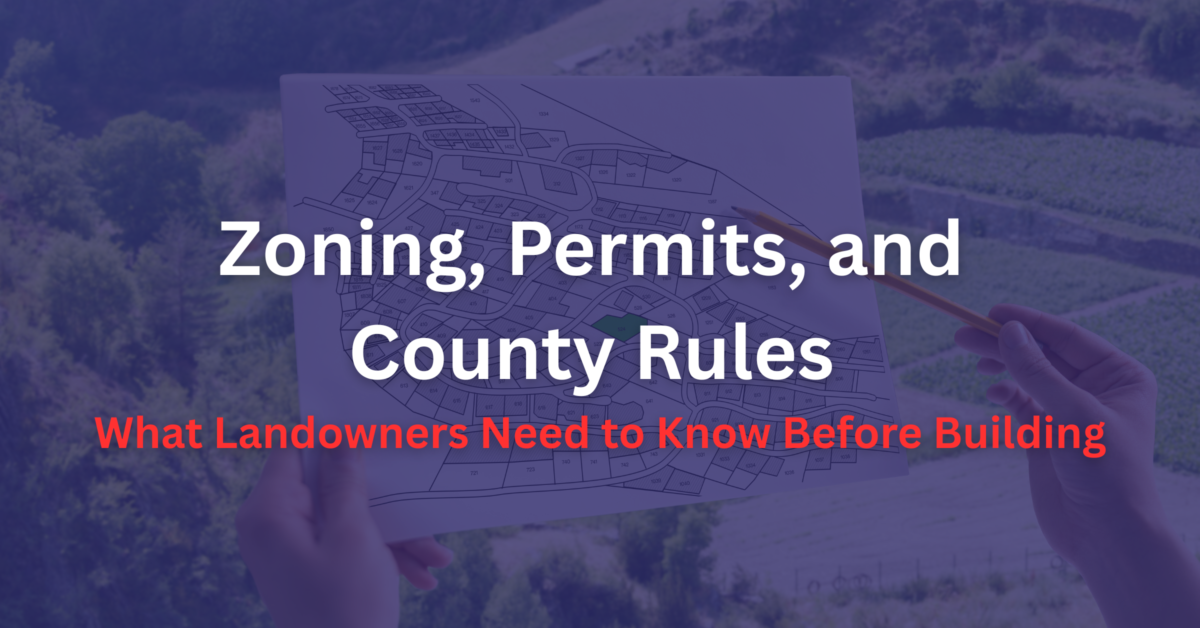
Zoning questions almost never come from people who are just browsing online. They come from people who already own land or are actively working toward building on it. Zoning only becomes important once you are serious, because until you have land, the rules do not really apply to you.
If you own property or are about to close on it, understanding zoning and permits early can save you months of delays and unexpected costs. This is especially true in Texas, where the rules change depending on whether your land is inside city limits or located in the county.
County Land Versus City Land
One of the first things to determine is whether your property falls under county jurisdiction or city jurisdiction.
County land usually allows more flexibility, particularly in rural areas. Many counties do not have traditional zoning laws that restrict home size or style. That flexibility is one reason landowners often choose to build outside city limits. However, fewer zoning rules does not mean no rules at all.
Even on county land, you are still responsible for meeting basic requirements. These often include septic permits, electrical inspections, and sometimes foundation approvals depending on how the home will be placed. Counties want to ensure that homes are safe, utilities are properly installed, and systems like septic meet health standards.
City land is typically more regulated. Cities often enforce building codes, minimum square footage requirements, and specific inspection processes. Some cities also restrict the number of dwellings allowed on a single property. These rules can directly affect which homes from the Wolfvalley inventory at https://wolfvalleybuildings.com/inventory/ will work for your land.
Because of these differences, zoning is one of the first filters that determines whether a project is straightforward or complex.
How Zoning Affects Your Home Choice
Zoning does not just determine whether you can build. It often determines what you can build.
For example, some cities require homes to meet minimum size requirements or be placed on permanent foundations. In those cases, certain models may be a better fit than others. Reviewing layouts and specifications ahead of time helps narrow options before you invest too much energy into a design that may not be approved.
This is why many landowners start by browsing models, then confirm zoning before making final decisions. It keeps the process realistic and grounded in what is actually allowed.
Who Is Responsible for What
Understanding responsibilities early prevents frustration later.
As a landowner, you are responsible for confirming zoning compliance with your local jurisdiction. This includes checking whether your land allows the type of home you want, how many dwellings are permitted, and whether any restrictions apply.
Landowners are also responsible for securing permits, coordinating utilities, and scheduling inspections. This typically includes septic permits, electrical inspections, and any required foundation approvals.
Wolfvalley focuses on building the structure itself. That means constructing the home to the agreed specifications and preparing it for delivery. We do not control local zoning or permitting offices, which is why those conversations must happen early.
Many delays happen when zoning questions are left unanswered until late in the process. By that point, buyers may have selected a model that is not permitted on their land.
Why Early Conversations Matter
Zoning rules can feel overwhelming at first, especially if you have never built on land before. The good news is that most zoning questions can be clarified with a few phone calls to local offices and a focused conversation about your property.
That is why many landowners choose to talk through zoning early during a consultation at https://wolfvalleybuildings.com/schedule-a-consultation/. These conversations are not about selling. They are about determining whether your land, your timeline, and local rules all align.
If you already own land and are asking zoning questions, you are likely closer to building than you think. Getting clear answers now helps you move forward with confidence instead of guessing and hoping things work out later.